Tuesday, December 31, 2013

Top 10 Articles

I really like statistics. As a kid, I would pore over baseball cards. I've done a decent job of not poring over the website stats, but it seems fun to end the year by highlighting the ten most-read articles of the year.

Here they are:

10. The Invisible Red Thread - this documentary shares the story of 15-year-old Vivian, who was adopted from China by a Canadian family. She returns to China to answer some questions about her past, her identity, and her future.

9. Closure - Like The Invisible Red Thread, Closure follows an adoptee as she seeks answers. Angela Tucker was adopted from foster care in a closed adoption. She manages to find her birth family and is ultimately embraced by them. Her filmmaker husband, Bryan, does a remarkable job of capturing her journey.

8. Despicable Me - Supervillain Gru adopts three girls from an orphanage. Although he intends to use them to further his evil schemes, he eventually has a change of heart and begins to care for them.

7. Beasts of the Southern Wild - This powerful, gripping film shows a marginalized community forced to relocate to a more sterile, safer place. It inspires thoughts about the ethics of forced helping, and also inspired a follow-up post, Twelve Things You Can Do to Make Sure Your Adoption is Ethical.

6. Star Wars - Luke Skywalker was raised by his Uncle Owen and Aunt Beru. He was not told the full truth about his family. He meets his sister under awkward circumstances, and meets his father in a traumatic way. Can adopted persons handle the truth about their history? Don't they have a right to know?

5. What Foster Parents Wish Other People Knew - A post by Sharon Astik on scienceblogs.com that gives fourteen powerful insights into foster-parenthood.

4. The Jungle Book - Disney's classic tale of Mowgli and Baloo has some relevance to cross-cultural adoption. And some very, very catchy songs.

3. 50 Children - An HBO Documentary about a couple that rescued over four dozen children from the Nazis.

2. Despicable Me 2 - Supervillain Gru has turned into an excellent, tender dad. Oh, and he's not a supervillain anymore. Now he tries to stop supervillains. Maybe my favorite film of the year.

1. Nia Vardalos interview - The "My Big Fat Greek Wedding" star adopted her daughter from foster care, wrote a friendly, funny, accessible book about the experience, and then took some time to talk about it.

So, that's it! 2013 in review. Thanks for reading Adoption at the Movies. Happy 2014! My goal for 2014 is going to be a movie review posted every Tuesday (with extra posts on occasion to share about a newly-released or upcoming film, really good books, or thoughts about adoption) See you next year!

Tuesday, December 24, 2013

Adoption Movie Guide: Santa Clause 2


Family secrets are hard to keep.


Scott Calvin has been Santa Clause for eight years. His teenage son Charlie knows; so do his ex-wife Laura and her husband Neil. Remarkably, Scott, Laura, and Neil have a better-than-civil relationship. Laura’s and Neil’s daughter Lucy thinks of Scott as “Uncle Scott,” and suspects that he might be Santa Clause. However, family secrets are kept and Lucy isn’t told. In fact, she’s told that it’s not true.


Scott finds himself in some trouble; he needs to get married quickly or he will forfeit his status as Santa. Charlie is also having trouble; he acts out through vandalism (even vandalizing his principal’s house!), largely because of his conflicted feelings about his father’s secret identity.
This is a Disney film, though, so Scott ends up marrying Charlie’s principal, and everyone goes away happy.

How is This Relevant to Adoption? 
Scott, Laura, and Neil maintain contact with each other. This likely happens in step-parent adoptions , which are one of several main types of adoption, but ongoing contact also happens in grandparent adoptions and other open adoptions.  Family secrets are also present in many different forms of adoption, and they’re a major theme in this film; it’s possible that Charlie’s acting-out behaviors are due to the discomfort he feels with keeping family secrets.

 
Strong Points
The positive, collaborative relationship shared by Scott, Laura, and Neil is exemplary. When Scott is feeling guilty for Charlie’s misbehavior, Laura comforts him, “don’t blame yourself for Charlie. You’ve been an excellent Dad.”

Scott and Charlie are able to talk about important things (like girls.)

Charlie powerfully sums up the experience of living with secrets, “I don’t live a normal life… My whole life has become about secrets and I hate it.” For adoptive families that have encouraged children to keep secrets, this could be a very powerful line.

By the end of the film, Charlie is at least able to share his secret with his principal and with his half-sister.

Challenges

Charlie’s principal chastises Scott, “Maybe if you spent more time with your son, he’d have fewer problems.” This sounds like conventional wisdom, but Charlie is struggling with family secrets rather than Scott’s absence.

Weak Points

Even though Charlie is able to share Scott’s secret identity with his half-sister and his principal, he is still expected to keep the secret from everyone else. Confidentiality would be a better expectation of Charlie: tell people you trust and who you want to tell, but don’t feel like you have to tell everyone.

Santa asks an elf to lie. A hero telling lies could be confusing to the young children most likely to appreciate this film.

Recommendations

The Santa Clause 2 is a good film this time of year for young kids, who will enjoy the Christmas theme and the candy-binging reindeer. The movie’s positive portrayal of an open family structure could be very encouraging to children in an open relationship with their first family. The movie’s focus on family secrets could be a way to invite a child to be freed from the perceived burden of secrecy. It’s a good fit – as a film, and as a conversation starter – for kids ages 6-11.

Questions for Discussion after the movie

Why was Charlie misbehaving?

What secrets does our family keep?

How do you feel about keeping secrets?

Who do you wish you could tell secrets to?

How do you feel about the relationship between your adoptive family and your first family?

For parents:


One character says, “Every parent’s biggest challenge is balancing work and children.” What do you think?

What secrets have you overtly asked (or covertly expected) your child to keep about their history and adoption?   What secrets have you kept from them?


MERRY CHRISTMAS from Adoption at the Movies!

Tuesday, December 17, 2013

Adoption Movie Guide: Chimpanzee

 When I asked my colleagues for adoption movie recommendations last year, I was interested – and skeptical – about the Disney Nature film Chimpanzee. It turned out to be relevant, though!

Narrated in the kid-friendly familiar voice of Tim “Buzz Lightyear” Allen, Chimpanzee follows a young chimp named Oscar. Oscar is loved by his mother Isha, but is separated from her when a rival band of chimps attack. Oscar’s life is spared, but he is now parentless in his tribe. He is chased away by other chimps and seems to be viewed as an annoyance. Eventually, though, Oscar finds himself in the good graces of Freddy, his tribe’s grumpy but loyal leader.


The Adoption Connection

A stork drops Lambert off, along with a bunch of baby sheep, into a herd of ewe. The stork tells each baby to pick the mother they like best. Lambert picks last, cuddling up to a ewe who is crying because no baby had picked her. The stork realizes his error and tries to take Lambert away, explaining, “Oh, that’s not a lamb. There must be some mistake.” He checks his list and realizes that Lambert was supposed to be delivered to Mrs. Leo Lion in South Africa. He explains, “I’ll take that viscous little brute and drop him in the jungle.” Lambert’s new mother defends him, and the stork quickly flies away, saying, “Oh, let her have him. I’m only a delivery service.”

Identity issues are prevalent in this film. Lambert wants to be a sheep. The sheep tease him because he looks and sounds different. Lambert hated to admit “that he was yellow through and through” (and not white like a sheep!)

Strong Points

Tim Allen explains that Oscar’s mother Isha “will do everything possible to keep her son safe.” He notes that her “patience never seems to run out.”

The tribe’s leader, Freddy, engages in nurturing behaviors towards Oscar. Tim Allen notes that some of these behaviors would only be done by a mother. This signifies that Freddy will adopt Oscar – he gives the first piece of food to Oscar and teaches Oscar how to hunt. The film shows that Freddy has “discovered a softer side that must have been there all along.” I like that Oscar will be able to thrive, and that he is accepted and embraced by the community. I also like that Freddy is able to be a positive, nurturing “adoptive father,” even though it was unexpected.  

Challenges and Weak Points

Oscar’s tribe of chimpanzees does hunt another species of monkey. They catch and eat the monkeys.

Isha is separated from the tribe by an attack from a rival tribe of chimpanzees. It is presumed that Isha has been eaten by leopards. This could be very traumatic for children who have lost, or lost contact with, their mothers. Tim Allen narrates that Isha “will never return.” It’s heartbreaking to realize that Oscar doesn’t know about his mother’s death. He spends considerable time searching for her, without success. Children watching this film who have been separated from their mother may connect with Oscar in these scenes. I can imagine the scenes being cathartic for some kids but confusing or even traumatizing for others.
 
Oscar eventually realizes that he needs to start thinking about his own survival. He is repeatedly rejected by potential mothers.  

The film seems to use the terms “adoption” and “foster parent” interchangeably. I could see it confusing some kids.

Recommendation

There are some parts of Chimpanzee that could be really challenging for some kids who’ve lost contact with their parents – or who have lost their parents to death. Oscar’s experience of repeated rejection could also resonate negatively with children who have been in multiple foster placements or disrupted adoptions. On the other hand, Chimpanzee speaks glowingly of Oscar’s mother and does show that Oscar ultimately finds family in an unexpected person. Because very young kids might not be able to deal with some of Oscar’s losses, I’d recommend this film for kids between the ages of 7-11. I also advise you to check it out before seeing it with your kids, to make sure that there isn’t anything in the film that would be too much for them. Chimpanzee could be especially positive for kids with a single adoptive dad or for kids who have experienced multiple failed placements but who have finally found a permanent home.


Questions for Discussion

How did Oscar feel when he tried to connect with Freddy?

What were the scariest parts of the movie? The saddest? The happiest?

What was Isha like as a mother? What do you think your birthparents were like? (This is a time to introduce and encourage positive responses!)


New to Adoption at the Movies? Check out the Adoption Movie Guides on the menu bar. Also, like Adoption at the Movies on Facebook, and follow us on Twitter for updates, thoughts, and more!

Saturday, December 14, 2013

The Hobbit: The Desolation of Smaug review - Adoption Movie Guide

Bilbo Baggins has joined a company of dwarves on a quest to reclaim their kingdom and their treasure, which years ago was captured by an evil dragon.  By reclaiming their treasure, the dwarves will re-unite different bands of dwarves under the rightful king, Thorin Oakenshield. The Hobbit: The Desolation of Smaug is the newly-released second film in what will eventually be a trilogy. I reviewed the first Hobbit movie in December of 2012.

Strong Points
Peter Jackson has captured some beautiful scenery on film. The action scenes are often well-choreographed and very entertaining. The film is engrossing.

Bilbo has great loyalty to his friends and they, in turn, seem to be embracing him more fully. In the last film, Bilbo questioned how much he actually belonged with this group – he’s from somewhere else, he’s got different personal characteristics – and some of the dwarves agreed that he didn’t belong. Now he does. The film’s ending song captures the sentiment that they have fully committed to each other.
 
Bilbo also demonstrates honor, showing the importance of keeping his word. At one point, he is given a choice to back out of a commitment he made. He presses on, saying “I promised I would do this and I think I must try.”

While in a dark forest, the company becomes confused and starts fighting. Bilbo manages to climb a tree – there, above the forest, he rejoices in fresh air and also benefits from a renewed perspective of where he is and where he needs to go.  Life is like that, sometimes. In the midst of difficult situations, it’s easy to lose track of how long it’s been going on, and it’s easy to lose perspective. Sometimes, getting an outside perspective is the only thing that can bring renewed hope and direction.


Weak Points
Although the film is rated PG-13, and all the violence is fantasy violence, there are some scenes that still might be a bit too shocking for kids who’ve experienced violence in real life. In battle scenes, we see two or three decapitations, one character’s limbs are ripped off, and several characters are fully impaled by arrows. Some young kids may be frightened by the film’s portrayal of the villain Sauron; he is portrayed as a hovering black mist, and his dark voice intones, “Death will come to all.”
 
 How is This Relevant to Adoption or Foster Care?
The company is being pursued by danger, and to be saved, they seek shelter at the house of Beorn, an unpredictable skin-changer. There seems to be a connection to foster care here – when arriving at a new home, kids don’t know whether the home will be kind or cruel, friend or enemy.
In my review of the first Hobbit film, I wondered whether there might be a parallel between Bilbo’s feeling of unbelonging to a new group, and a similar feeling felt by a newly-placed foster child. Now, a year later, Bilbo does belong to the group – and I think a legitimate parallel is that, as time passes, an adoptive family or foster placement can become a new “normal,” with its own loyalties. Another film that captures a family reaching a sense of “new normal” is Despicable Me 2.

Recommendations
 The scenes of violence might preclude this from being a good choice for young kids who’ve experienced real-life violence, but for most kids ages 12 and up or so, this should be a pretty good ride.

Questions for Discussion after the movie
 In what areas of your life do you feel like the company in Mirkwood, confused and without direction? How can you get an outside perspective?   When have you felt like that before? How did you get out of it?

The company had to depend on the kindness of a stranger when they visited Beorn’s house, and it wasn’t a sure thing. How must they have felt? When have you been faced with a similar choice?


Want to know when more movie reviews are posted? Like Adoption At The Movies on Facebook or Follow Us on Twitter.

Thursday, December 12, 2013

Getting ready for The Desolation of Smaug

The sequel to last year's Hobbit movie will be in theaters tomorrow, Friday (the 13th). If it is like its predecessors in the Peter Jackson / Tolkien films, it will be exceptionally well-made with some frightening scenes and good interpersonal dynamics.

Your kids might want to see the first Hobbit movie to ramp up for the sequel. If they can handle the frightening scenes, you might let them. The protagonist is thrust into relationships with a group of strangers, initially feels excluded, but eventually fits in. He shows an openness to adventure and a genuinely compassionate heart. The film also provides an interesting way to introduce the topic of journaling or lifebook-making, both of which can be helpful to adoptees (and adoptive parents).

Want more? Hop over to the Adoption Movie Guide of The Hobbit!


Wednesday, December 11, 2013

The Hunger Games: Catching Fire Adoption Movie Guide

Katniss and Peeta survived a battle to the death one year ago. Now, their tyrannical government is requiring them to compete again.


How is This Relevant to Adoption?
Katniss (and the other young combatants in these battles) is taken from from her family by the government. The emotions – fear, confusion, and grief – are also often felt by children who are taken into foster care.

Strong Points
Some characters demonstrate loyalty, goodness, and a willingness to sacrifice themselves for the good of others. There's a strong female lead.

Challenges
Some characters seem to demonstrate post-traumatic stress. It’s sad, but understandable.

Weak Points
The government is very much “the bad guy.” The film involves constant danger and brutality. Each of these could be very troubling for kids in (or who have been through) foster care. A scene where Katniss has to leave her sister behind could also be troubling.

Recommendations
I know that The Hunger Games is a popular series. This film is exciting, and it’s telling an interesting story. But I can still see lots of ways that this would be challenging for a kid or teen who’s experienced violence.  I wouldn’t recommend it for kids younger than 12. For teens who’ve been through trauma, parents should probably screen the film first. Even though the film is exciting, there are certainly some reasons why it might not be good viewing for a foster-care audience.
 
Questions for Discussion After the Film

Have you ever been forced to do something that felt wrong?

Tuesday, December 10, 2013

Now in Stores: Despicable Me 2 DVD Release

Want to share a movie with your kids that shows a positive, caring, single adoptive dad? It's showing up in stores today. Former super-villain Gru has become a doting, loving father. While Gru is not yet perfectly sensitive, he has grown significantly since the first Despicable Me film. This one could be particularly helpful for kids adopted by a single parent. I also noticed that adoption themes aren't as central in this one as they were in the first, but the girls are thriving. This film does indirectly give hope that, after the crisis moments of adoption occur, families can reach a state of normalcy - and that it can be a time of thriving.

Planning on buying or renting it? Click on over to the Adoption Movie Guide of Despicable Me 2 for some discussion ideas!


Monday, December 9, 2013

Delivery Man Adoption Movie Guide

Years ago, David Wozniak made multiple donations to a sperm bank. He habitually has financial troubles, and his donations were among several other attempts at improving his financial situation. The bank to which he contributed used his sperm with every applicant over a set period of time. Wozniak recently learned that he has sired over 500 children, and that over 100 of them have filed a lawsuit to require him to reveal his identity. Wozniak begins to learn about his offspring, and starts to meet them. He tries to care for them and improve their lives, but he struggles with whether to reveal his identity. The case ultimately goes to trial.


How is This Relevant to Adoption?
David is more or less a birthfather, hidden behind legally-guaranteed secrecy. He isn’t sure if he wants to be known. His children (or at least some of them) want to know him. Even while debating his ongoing anonymity, David feels a strong desire to know his children.

Strong Points
David rather quickly begins to love his children, even though his lawyer advised him to keep distance.
Some of David’s children have special needs. David goes out of his way to be kind to them.
The film raises the question – whose rights take precedence? The case is made that a confidentiality agreement signed between David and an agency  impacts the children more than it impacts anyone else. They were not consulted and did not consent to having their history hidden from them, and they say it’s wrong. When the law affirms David’s right to confidentiality, his children express their disappointment, but note, (paraphrased quote) “Just because the court hasn’t required him to reveal himself, that doesn’t mean he can’t choose to do so out of his own free will. We hope he does the right thing.”
David is believable. Even while hidden behind a veil of secrecy, he longs to know his children.

Weak Points
Some of the characters’ motivations, reactions, and responses might be too idealistic.
One of David’s children discovers David’s identity fairly early in the movie. He more or less blackmails David – spend time with me, love me, and give me attention, and I won’t blow your cover to the others who are seeking you.


Recommendations
I was really surprised to like this as much as I did. Delivery Man is positive, uplifting, and a hopeful portrayal of what might happen if secrecy is removed from adoption. (Well, OK, it’s not technically about adoption, but wow, does it seem relevant and encouraging.) Not a good movie for kids. A great movie for adults.

Questions for Discussion After the Film

How has (or how does, or how might) secrecy impact your adoption? How does it hurt? What purpose does it serve?   What benefits do you see in openness? 

Thursday, December 5, 2013

Instructions Not Included review: Adoption Movie Guide

Valentin lives in Acapulco, and engages in many short relationships with vacationing young women. One of his former lovers, Julie, shows up at his doorstep holding a baby, Maggie. She explains that the child is his, and she quickly disappears. Valentin learns that Julie is from the United States. He goes to Los Angeles to try to locate her. Although Valetin does not find Julie, he does impress a movie director when he heroically rescues Maggie. Valentin becomes a top stunt man and establishes a successful career for himself, while providing a good life for Maggie. And then, years later, Julie returns, demanding that Maggie be returned to her. Valentin engages in court battles to try to keep Maggie. Valentin knows that a medical issue is threatening to separate him from Maggie, and so he is willing to try anything to keep together with her.


The Adoption Connection

The film absolutely raises the question, “What makes a person a parent? Genetics or behavior?”

Valentin creates an elaborate story to explain the absence of Maggie’s mother to her. Maggie eventually learns that it is all lies, and this shakes Maggie’s faith in Valentin.


Strong Points

Valentin quickly grows up into a mature, loving father.

Even though their relationship is heavily conflicted, Valentin and Julie are ultimately able to work together to meet Maggie’s needs.


Challenges

The movie portrays Julie’s re-investment into Maggie’s life as love-based but antagonistic. This isn’t unrealistic, and it’s helpful to realize that an antagonistic relationship between adoptive and birthparents (or between separate birthparents) can be fueled by good intentions and love. Julie and Valentin eventually do work together, but there is a lot of conflict and harmful words spoken, and Maggie is caught in the middle.

Valentin goes on the run to maintain his relationship with Maggie. This is problematic, but it is understandable. Like Dandelion Dust had a similar scene, but seemed much more troubling.

There is a particularly sad ending to the film.


Weak Points

Kids aren’t always desired; one character explains, “I want an abortion.” Another complains about “damn cheap condoms.”

Maggie experiences lots of dangerous situations as a baby.

Valentin’s well-intentioned effort to explain Maggie’s mother’s absence does far more harm than good. Kids have a right to know the (age-appropriate) truth; but truth tempered for age-appropriateness is different than a fanciful lie. When Julie does meet Maggie, she quickly and bluntly dispels the stories that Maggie has believed her whole life, simply saying, “Your dad made all of it up.”

Valentin seems to try to manipulate Maggie into liking him more. He also makes a crude but clever pun about Maggie’s mother choosing to prioritize other things instead of Maggie.

One child is told “Your mom didn’t love you, so she left.”
 
Recommendation

Instructions Not Included is at times heart-wrenching, at times endearing, and at times thought-provoking. I wouldn’t recommend it for kids, but I do recommend it for prospective adoptive parents – it’s a well-made film and it lends itself to serious and important thoughts.

Questions for After the Movie

What makes a parent, a parent?

Was Julie’s involvement in Maggie’s life a positive or a negative thing?

Why did Valentin run? Was he right or wrong for doing it?


Maggie was a valued part of Valentin’s family. If Julie gets her way, what would happen to that relationship?

Tuesday, December 3, 2013

Now in Stores: The Smurfs 2

The Smurfs 2 releases on DVD today, just in time for holiday shopping. The film is unexpectedly very relevant to adoption; Smurfette was created by Gargamel, adopted and significantly changed by Papa Smurf, kidnapped back by Gargamel, and eventually rescued and reclaimed by the Smurfs. Along the way, she struggles very much with questions of identity.

One of the posters used to promote the film in theaters asked, "Who's Your Papa?" Sadly, the poster and the film take a dichotomous view -- only one can be the dad. The other can't be. In the world of the Smurfs, there's good reason for the dichotomy. Gargamel is deceitful, selfish, and dangerous. Most birthfathers probably aren't, in spite of some unfortunate assumptions that they are. This film sides with the unfortunate and ungracious prejudices.

Looking to buy a kid-friendly sequel that does a better job of portraying a father? Despicable Me 2 is excellent.

In case you'd find it helpful, click on over to the Adoption Movie Guide of The Smurfs 2


Monday, December 2, 2013

Now in Stores: The Wolverine DVD Release

OK, it is a very violent film. But there are several redemptive factors to The Wolverine that might come close to making it suitable family viewing for families with teens. Wolverine goes through depression (more or less), and ultimately decides to live. There's also the affirmation that people need to face difficult truths rather than hide from them - as the film puts it, "You can't pretend s*** isn't happening when it is." There are some concerns, though, that make Wolverine a less-than-ideal role model.

The Wolverine comes out in stores tomorrow. Wondering whether to buy or rent this one? Check out the Adoption Movie Guide of The Wolverine for some more insight.

Thursday, November 28, 2013

Free Birds Adoption Movie Guide

Reggie the turkey has been skeptical of farmers for a long time. But on the whole farm, Reggie is the only turkey who doesn’t blindly accept the farmers’ corn as a free gift. Because of his eccentricity (and perhaps also because of his scrawniness), Reggie is excluded from his community (see Turbo and Ratatouille). Good fortune finds Reggie, though, and he is selected by the President of the United States to be the pardoned turkey. He enjoys his newfound life of luxury for a short while, but is quickly kidnapped by Jake, who has come to take Reggie to the past in order to stop turkey from becoming a Thanksgiving staple.


The Adoption Connection

There’s no real connection to adoption in Free Birds, but there are themes of the importance of babies; a group of eggs are rescued from disaster by a team made up of some relatives and some non-relatives.

Strong Points

Characters sometimes exemplify courage and determination. One explains, “never give up, ever, no matter what stands in our way.”

Characters do eventually learn the importance of depending on – and being dependable for – others.

Challenges

As a very young bird, Jake’s mother helps him escape from a factory farm. The expectations of the whole clan of birds rest on his shoulders – to build a better future. Jake is heroic, but some kids might resonate too closely with being given adult-sized expectations.

Recommendations

There’s not a lot of meat on these bones (get it… It’s a turkey movie… Oh, never mind…) Free Birds is inoffensive, but it doesn’t really do much in the way of communicating a deeper meaning. I know it’s a kids’ movie, but, the best kids movies often do have some depth. I feel like this one doesn’t. Nothing in it seems likely to be traumatic, though, so if your kids want to watch a turkey-themed movie at Thanksgiving, it’s not a bad choice. But kids any older than 8 or 9 will probably be bored.

Questions for Discussion
 
What would you tell “past you?”


What would you tell “future you?”

Happy Thanksgiving from Adoption at the Movies!

Tuesday, November 26, 2013

Thor The Dark World Adoption Movie Guide

Loki sits in Asgard, imprisoned for war crimes committed against Earth. This is somewhat awkward, because the king of Asgard – and the one who sentenced Loki to life imprisonment – is Loki’s adoptive father, Odin. Odin and his son, Thor, feel that the universe is safer with Loki contained. Frigga (Odin’s wife, Thor’s mother, and Loki’s adoptive mother), seems to have a more hopeful view of Loki. She visits him in prison, and he loves her.

In a time of great need, Thor releases Loki from prison in order that they can fight together against an ancient evil, returning from days long past. Loki fights alongside Thor and appears to die. But Loki is a master of deception, and he seems to have his heart set on the throne of Asgard.


The Adoption Connection

Loki’s adopted status was a plot point in the first Thor movie, and was played for a joke in an Avengers film. In this film, Loki and Thor wrestle with whether adoption truly makes them brothers.

Strong Points

In spite of all that Loki has done wrong, he still loves Frigga, and Frigga is committed to him.

Thor is persistent in giving Loki “new chances” to be accepted.

Challenges

Thor exhibits decidedly mixed feelings towards Loki. At one point, he tells him that the “glimmer of hope” he had in Loki’s redemption is gone. He threatens to kill Loki. Later, however, Thor is moved by Loki’s apparent selflessness, and promises to rectify Loki’s reputation. Unfortunately, it becomes evident that Loki has tricked Thor.

Weak Points

Thor and Odin seem less than fully-committed to Loki as a member of their family. We are privy to a conversation between Loki and Odin. It’s not pretty. Loki asserts, “the throne is my birthright.” Odin harshly counters, “Your birthright was to die as a child. If I had not taken you in, you wouldn’t be here to argue with me.”  Then Odin sentences Loki to life imprisonment, adding, “You’ll never see (your adoptive mom) again, and (my birthson) will be king (rather than you.)” Thor seems to play the, “I’m mom’s favorite” card against Loki. He tells Loki, “you had mother’s (skills,) but I had her trust.”
 
After being imprisoned, Loki feels disowned and disenchanted. He says that he’s been lied to his whole life. Frigga visits Loki; he declares out of his pain, “Odin is not my father.” Frigga seems to react defensively, “Then am I not your mother?” Loki responds, “you’re not.”

Of all the members of his adoptive family, Loki is closest to his mother, Frigga. Unfortunately, she is killed.


Recommendations

I struggle with Thor. There is definitely some love in the royal family of Asgard, but Loki does seem to get less than his fair share of it, and the film doesn’t really seem to question this. If you see it as a family, be prepared to start some conversations about everyone belonging equally to the family. A recent superhero film that does a better job of handling belonging is Man of Steel.

Questions for After the Movie
 
Frigga asked Loki, “Then am I not your mother?” How would you have answered? Why did Loki answer the way he did?

How is Odin a good father to Loki? How is he not?

What could Thor do to be a better brother to Loki?


How important was it to Loki that he had been lied to? How does the importance of dependability and honesty show up in the real world for kids who have experienced trauma?

Sunday, November 24, 2013

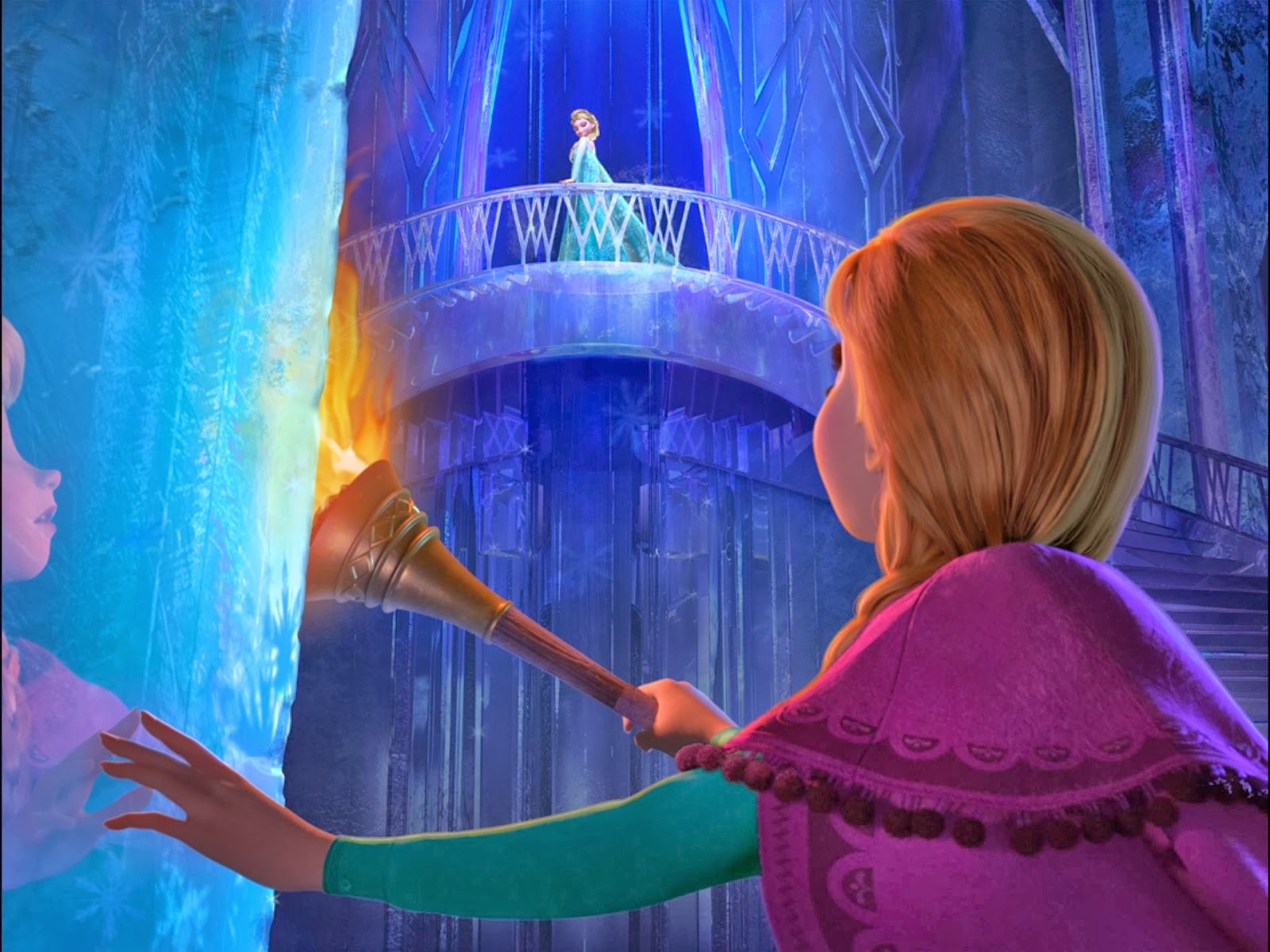
Frozen Movie Review (Adoption Movie Guide)

*Some spoilers ahead*


 Elsa and Anna are princesses of Arondale, a peaceful country with at least some of its industry based on the harvesting and sale of ice. Elsa, the older of the two sisters, was born with the magical ability to create winter – frost and snow come forth from her hands at her whim. Anna loves this, and she and Elsa often play together in homemade, magical snow. Elsa’s parents have always been fearful of her power, and one day, Elsa seriously injures Anna. Healers are able to revive Anna, but in order to keep her safe, they make her forget about Elsa’s powers, and warn that Elsa’s powers must always be hidden.

 
Years later, when Elsa inherits the kingdom, she has become distant from Anna – and from everyone else. Although she dutifully tries to hide her magical abilities, her secret gets out. Misunderstood by her subjects, she exiles herself. Anna sets out to bring her back to the kingdom. Meanwhile, hurt by her sister’s longstanding unavailability, Anna also seeks love, and gains the attention of two different men.

The Adoption Connection

Elsa has been told to keep her secret hidden. Secrecy is called for – and practiced – in order to protect Anna, but it causes Anna and Elsa great pain and nearly ends their sisterly relationship which had once been so close. Secrecy in adoption is often practiced with kind but fear-based motives (protect a child from pain), and can end up causing more pain than it prevents.  Age-appropriate honesty is a much healthier solution than secrecy. Secrecy suggests shame, while age-appropriate honesty allows a person to gradually come to acceptance and integration of difficult truths.

Also, the sibling relationship in Frozen reminds me of how central sibling relationships are to kids in foster care. Our spouses often miss the first twenty or so years of our life. Our parents miss the last twenty years or so. Our siblings can be there for the whole ride. It reminds me of how important it is to keep siblings together and (in foster care) how important it is to have families who are willing to take in sibling sets as a whole.


Strong Points

Well-performed Disney songs (Idina Menzel is one of the leads) and lovable characters (including Olaf, a living snowman and Sven, a personable reindeer) make this an endearing, memorable film. The film is visually smooth, and visually beautiful in the same way that Life of Pi is beautiful.

Love wins out over fear.

So many Disney movies have centered on “love at first sight.” Frozen actively challenges that notion, and suggests other, healthier kinds of love.
 
Frozen demonstrates the pain and effects caused by secrecy and fear, and shows that honesty brings healing, and (as my wife phrased it), perfect love can drive away fear.

Sometimes, teenagers look to unhealthy sources to have their needs met when they don’t’ feel that those needs are met by their families. Frozen cautions against impulsivity.

Anna eagerly seeks to reconcile her relationship with Elsa, even after years of pain. Even during the pain, Anna sticks up for her sister, saying “she’s not a monster.”

Challenges

One character observes that Elsa’s power has only gotten into Anna’s head. “The heart is not so easily changed, but the head can be persuaded.” He wipes memories from Anna’s head in order to save her.

With regard to Elsa’s power, a wise character warns her, there is beauty in it, but also danger. Her parents seem to focus on the danger, though. They hide her away from her community and her sister. Anna, not knowing the reason, begs her, “Come out. It’s like you’ve gone away.” Elsa is also pained by the separation, but is unable to share the reason with Anna, believing that the reason will do her harm. Elsa sings her mantra, “Conceal it, don’t feel it, don’t let it show.” At another point she sings, “Don’t let them in, don’t let them see. Conceal, don’t feel. Put on a show. One wrong move and everyone will know.” It’s a pretty accurate explanation of the shame involved in secrecy. She sings her wish, that we “don’t have to feel the pain of the past anymore.” So is Anna’s explanation, “One day, Elsa just shut me out. I never knew why.” Anna even tells Elsa, “All you know how to do is to shut people out.”  When Elsa’s secret comes out, she embraces her identity, but still feels like this will separate her from everyone else. In a way, this kind of makes me think of how, for a long time, adoption was kept secret. Now we talk about it, but often, the talks are in our angry voices and reflect a sense of dualism – adoption is either all-good or all-bad. The film ultimately finds a balance, and I think the adoption community will to, where people can respect each other and work together cooperatively. (Like Kid President says… It’s OK to disagree, it’s not OK to be mean.) The film resolves the issue positively, but make sure that your kids don’t latch onto these songs instead of the resolution. In a nutshell: You don’t have to hide your identity to be in community, and you don’t have to be in isolation to embrace your true self.

Some children might be taken aback when, early in the film, Elsa’s and Anna’s parents die. The scene is sad, but not shocking.

Recommendations

Yes! Frozen is very well-made. Kids will love it, and even teenagers can get something out of the film, and it will be positive. I love the fact that “love at first sight” is not portrayed as the highest love, and I love that secrecy and fear are overcome by love. Although the main characters are female, boys and girls will both like this one. I’d recommend it for kids up to 14.

Questions for After the Movie

What secrets are you keeping? Why? What are you afraid of?

Why did Elsa keep her secrets? What might have happened had she told them earlier? How would her life have been different?

Is there anything about yourself that you’re scared of? How can you be less afraid?

When in your life has “the truth” chased away fear?

Family Activity

Get a snow cone maker, and use that to make snow. Make a snowman, and use leftover candy corn for the nose. Hey! Your own edible Olaf!

Wrapping Up

Are you new here? Check out our other Adoption Movie Reviews – You might especially like Cloudy with a Chance of Meatballs 2,   Meet the Robinsons,  and  Despicable Me 2.

Want to read more about the history secrecy in adoption? You might like this post:  Adoptions in America: Open or Closed;  and this one:   12 Things You Can Do to Make Sure Your Adoption is Ethical.


-           Addison Cooper, LCSW, is a licensed clinical social worker and therapist with several years of experience in foster care and adoption. He reviews movies through the lens of adoption at www.adoptionlcsw.com and has also written movie reviews for Adoptive Families, The New Social Worker, and Foster Focus magazines. Follow him on Twitter @AddisonCooper 

Friday, November 22, 2013

7 True Things about Teens in Foster Care

  1. Teenagers often age out of foster care without finding a permanent home. This kind of stacks the deck against them. Some of these teens do succeed, but it’s a hard road, and many don’t make it without help.

  1. Teens in foster care can – and will – tell you what they want… including an adoptive family.

  1. Teenagers in foster care don’t fit the negative stereotypes that circulate about them. The teens in foster care that I’ve met are interesting, resilient, and adaptable.

  1. Sometimes, it just takes one person to make a permanent, positive impact in a teen’s life. And teenagers are more important than starfish.

  1.  Some prospective adoptive parents decide not to adopt because they are “too old to adopt”… They’re 50 now, and don’t want to be 68 while their kids are still in school. If you adopt a teen at 50, when they graduate, you’ll still be pretty young.

  1. Babies are great, but you could make the argument that getting a teen ready for Prom is more fun than changing diapers.


  1. You don’t have to wait as long to see who a teen grows up to be.

Thursday, November 21, 2013

Adoption Movie Guide: Short Term 12

Grace is a supervisor at Short Term 12, a temporary group home for teenagers. She supervises (and dates) a veteran staff named Mason, and is in the process of training a new staff member named Nate. Grace is unexpectedly forced to confront her own past when a client’s present issues mirror Grace’s unresolved past. Will Grace be able to heal her own wounds, save her client from abuse, and keep her job and personal life in order? It’s a real challenge which she meets with some degree of success.  Short Term 12 is an emotionally gripping, realistic-feeling slice of life in a group home, and while the group home feels a little sanitary at times and a little overly-dramatic at times, the movie excels at capturing the raw feelings – those of the professionals that work with kids who’ve experienced abuse, and those of the kids themselves.


The Adoption Connection

One staff member at Short Term 12 was raised in foster care.

The film’s setting is also very relevant to adoption. I work in foster care adoption, and have known many children who, for one reason or another, are placed in group homes rather than family homes. Sometimes it’s because of a child’s behaviors; other times, it’s because there aren’t enough homes willing to take in a child of a certain age. Group homes are often places of waiting. Like Astrid in White Oleander, many teens are forced to wait in a group home, sometimes for months, other times for years.

A challenge, too, is that kids waiting in group homes might start to “seem” intimidating to foster parents. I’ve recently seen a kid emerge from a group home to thrive in an adoptive family, and I know my experience isn’t unique. Films like Short Term 12 might be helpful to humanize and normalize the kids in group homes, and might encourage some people to consider providing them with permanent homes. I appreciate that the group home portrays the group home staff as caring, but it also acknowledges, “We’re not their parent or therapist; we’re just here to create a safe environment.”  And admittedly, kids need parents. The film also highlights the emotional distress of an 18-year-old who is about to “age out” of the group home. Kids can succeed after aging out (See PBS’s documentary Aging Out), but many find themselves homeless or incarcerated. It might not have been the goal of Short Term 12 – but the film does highlight the need for foster parents willing to love, nurture, and provide permanency for teens.

Strong Points

The film captures powerful emotions. They’re honest. One character raps about being forced by his mother to sell drugs. He laments “living life, not knowing what a normal life is like.” Another writes heart-wrenchingly about an octopus being slowly killed by a shark who pretends to be her friend. It shows the power of creativity, and also conveys the experiences that are very real to some kids. This could encourage some adults to help, and could scare others away.
Even as an adult, Mason considers his former foster parents “Ma” and “Pa.” He honors them on their wedding anniversary by attending a party along with many of their other former foster children, and he notes, “Look at this beautiful family you made. You showed me what it was like to be loved. Everything good in my life is because of you.”


Nate progresses from being uncomfortable around the teens to being comfortable and competent. Prospective foster parents might be encouraged by this – even though teens might seem scary and intimidating, you eventually get used to being around them.

Many characters – staff and youths alike – demonstrate kindness even in the midst of their pain.


Challenges

The group home staff has obvious love for their charges, but sometimes seem too quick to discipline. Behavior modification is sometimes necessary, but sometimes it’s better to figure out the root of the behavior, rather than only trying to fix it. (In the film, group home staff were pretty strict (and ineffective) about the teens not using foul language)  

The film is very evocative of emotion. In general, I think this is a good thing, but it could be too much from some viewers, depending on their history. Some scenes will be too traumatic for some viewers – one character was molested by her father, one character attempts suicide, we learn of one youth’s death, a character is seen engaging in self-harming behavior, and another character shows the scars from her own cutting.

Weak Points

Grace is frustrated when one of her teenagers is released for a visit with a parent who she believes abuses her. In real life, Grace would probably be a mandated reporter, and could have filed a child abuse report. By the way – sometimes, filing a child abuse report is the first step in saving a kid from ongoing abuse (as painful as it is to acknowledge, I have met and worked with several children who were ritualistically tortured. Child abuse hotline calls may have saved those kids’ lives.)

One professional discloses their own abuse history, for the first time ever, to a client. It actually helped build their relationship and helped the adult heal as well – but in real life, it’s not healthy to expect kids to carry adults’ burdens; in fact, many kids in foster care present as parentified and need help learning not to carry adults’ baggage.


Recommendation

The film is better aimed at adults (it is rated “R”); I can imagine many of the scenes and stories being very difficult for kids – and even for adults – who have experienced trauma. But if you think you can handle it, do watch Short Term 12. If you’re considering adoption – let this film be your introduction to the needs of teenagers in foster care. Want information about foster care adoption? The Dave Thomas Foundation is a great place to get started.

  
Questions for Discussion

What makes you want to help kids? What fuels that desire?

Have you ever felt that a professional was making an incorrect judgment about the care of a child in your home? How did you deal with that? What resources do you have that could help you “stand up” for your right to voice your perspective?

How can you be a part of meeting kids’ needs?
Open Adoption Blogs